

The Global Research Centre for Diverse Intelligences is pleased to announce the recipients of our Small Research Project Grants. Each recipient will receive up to £40,000 to support new research exploring a broad range of questions across the field of Diverse Intelligences.
We received a strong set of applications from projects based in nine different countries, with topics ranging from bumblebee object manipulation to simulated first contact with extraterrestrial intelligences. Narrowing this field to just six successful projects was a difficult task.
We are grateful to all of the reviewers who generously gave their time and expertise to assess the submissions and help guide the final selection.
Bridging the Human-Animal Divide. Applying Intergroup Relations Theory to Animal Behaviour Communication
University of St Andrews, UK
Manon Schweinfurth, Abba Stefaniak & Samuel Pehrson
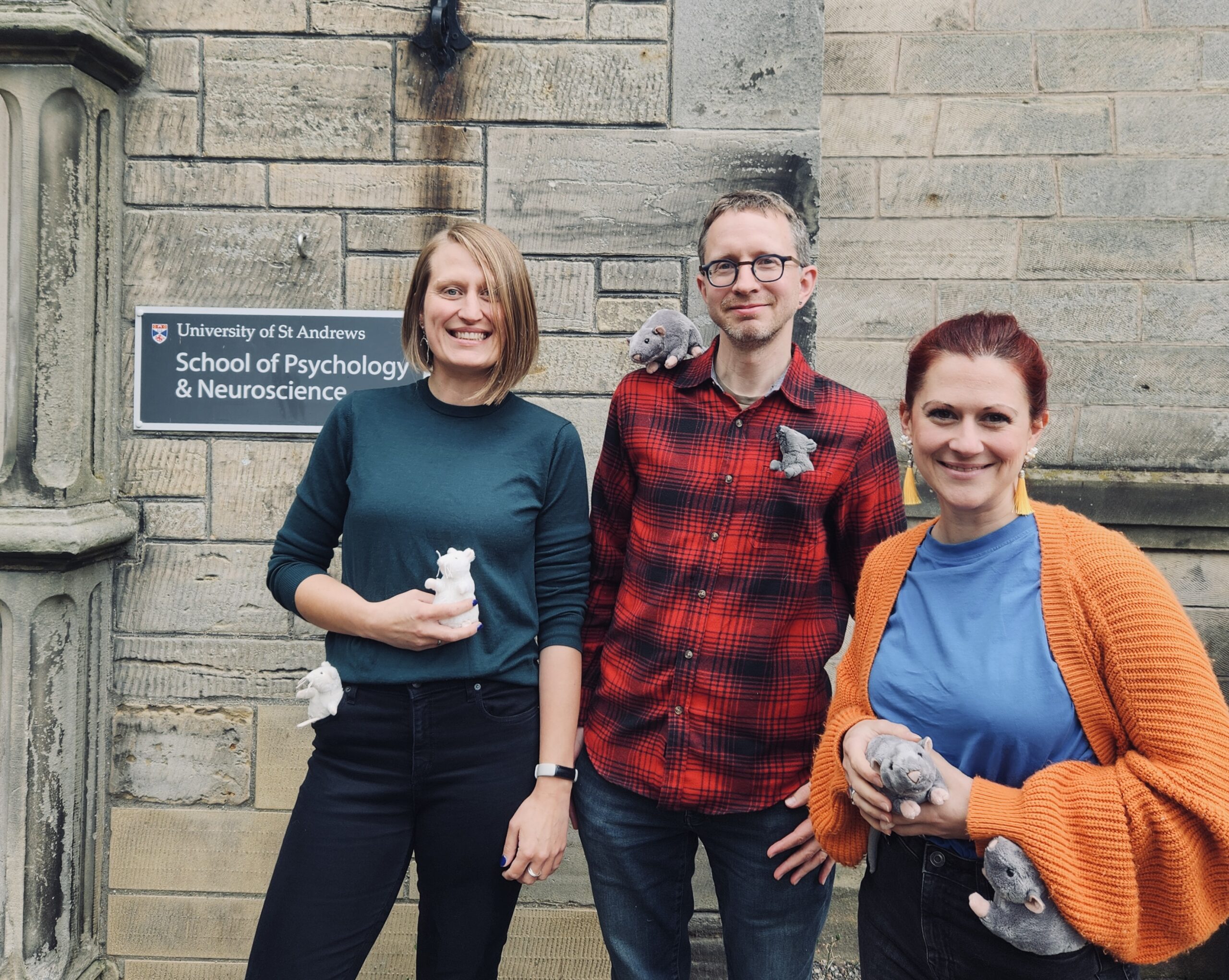

What if the way we communicate animal research could change how people feel about animals? Despite growing scientific evidence that many animals experience complex emotions, solve problems, and form rich social relationships, people often still view traits such as intelligence, culture, or joy as uniquely human. This project brings together two fields that rarely work together, animal behaviour science and social psychology, to investigate how best to bridge this perceived divide. By focusing on rats, a species that is often misunderstood and viewed negatively, our research will tackle an important and overlooked challenge in how we relate to animals.
Specifically, this project will explore whether learning about the advanced cognitive and emotional skills of rats and watching humans engage in positive contact with rats can change perceptions of these animals, increasing empathy and concern for animal welfare. It will also identify the most effective ways to communicate about animal cognitive and emotional capacities, comparing text, audio, and video. By combining insights from research on animal minds with methods from studies of human social relationships, this work aims to transform how animal research is communicated, challenge assumptions about human uniqueness, and inspire more compassionate attitudes toward animals across a wide range of settings, from laboratories and farms to, cities, homes and zoos.
Disagreement as Resource: A Computational and Empirical Account of Collective Search
The University of Edinburgh, UK
Bonan Zhao, Neil R Bramley, Derek Ball & Gabriel Ramos- Fernández
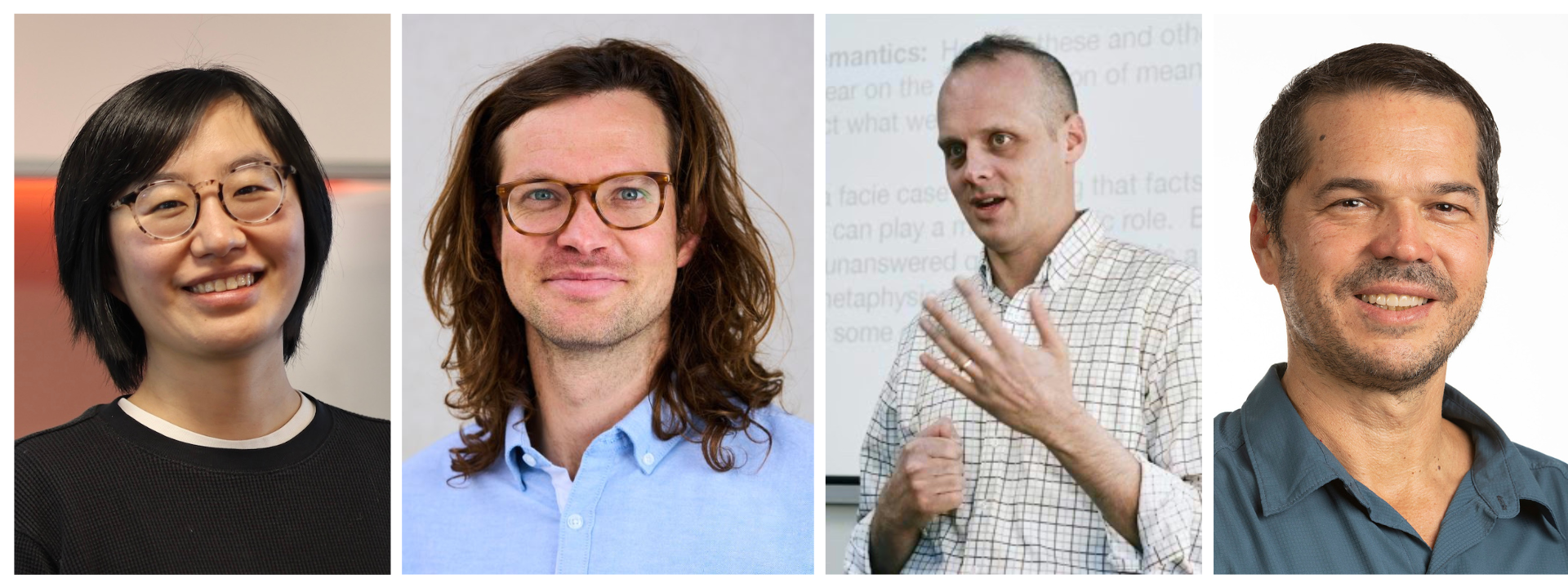
Disagreement as Resource: A Computational and Empirical Account of Collective Search challenges the assumption that the best teams are ones that quickly reach agreement, and asks what if conflict, debate, and difference of opinion are exactly what groups need to solve hard problems?
The project brings together behavioural science, computational modelling, and philosophy to study how people with genuinely different ways of thinking tackle problems together. Using a visual puzzle task, the researchers will compare groups that explore several possible solutions at the same time with groups encouraged to reach agreement quickly. By examining how these different approaches shape problem solving, the project will uncover when disagreement can fuel creativity, inspire new ideas, and help people find better solutions.
The researchers will also examine what happens when an AI system joins a human team: does it broaden the range of ideas the group considers, or does it steer people toward similar solutions? The findings will deepen our understanding of how diverse forms of intelligence—human and artificial—can collaborate effectively on complex problems. More broadly, they invite us to rethink collaboration itself: the future of problem solving may depend less on getting everyone to agree and more on learning how to think together more effectively.

Misfit Minds: Cognitive Friction, Diverse Intelligences, and High-Growth Ventures
University of St Andrews, UK
Sapnoti Eswar, Irina Merkurieva & Yiyang Fang
Do startups founded by employees experiencing “cognitive friction”—a measurable mismatch between their specific cognitive skills and their incumbent employer’s dominant cognitive culture—achieve higher overall venture success (e.g., profitability, fundraising rounds / amount, survival rates, or patenting) than low-friction spin-outs or de novo entrants?
Furthermore, how does the team-level configuration of “diverse intelligences” moderate this relationship? Specifically, we investigate whether high-friction founders achieve better outcomes when they build founding teams that deliberately combine diverse cognitive profiles (e.g., pairing high-analytical friction founders with creative or relational co-founders), leveraging their initial mismatch to drive complex product innovation and superior venture performance.
How do nonhuman primates entertain the notion of possibility?
University of Sitrling, UK
Kresimir Durdevic, Giacomo Melis, Matthias Allritz & Daniel Hanus
Children and nonhuman animals may lack a crucial cognitive aspect of inferential reasoning — the understanding that some outcomes are necessary and some are merely possible. Psychologists assumed this ability can only be expressed in mental representations that are propositional (i.e., language-like) in nature, which may be unavailable to nonhuman animals and young children.
Alternatively, the notion of possibility is not exclusively propositional. Similarly to how one can track the difference of how full two cups of water might be in terms of numeric ratio or in terms of physical magnitude, the notion of possibility may be expressible in more ‘physical’ terms. This project will test for ways in which great apes might more readily express notions of possibility in intuitively physical, rather than propositional terms. The great ape experimental work will complement ongoing parallel work with young children.


Empowerment-based learning with a physical development curriculum
Toyota Technological Institute at Chicago, USA
Kaylene Stocking, Shiry Ginosar, Matthew Walter & Alison Gopnik
This project explores how robots can learn about the world the way young children do—by playing, exploring, and discovering what they can do. Unlike today’s robots, which are typically trained for specific tasks with their full physical abilities from the start, our robots learn gradually as their physical capabilities expand over time. By combining this human-inspired developmental approach with curiosity-driven exploration, we hope to build robots that can adapt more easily to new situations while also learning more about how intelligence develops.
Details about the remaining projects will be added once agreements with each organisation have been finalised.